Volume, Hair Loss & Smart Anti-Aging Solutions (35–65)
Let’s say this first.
If your hair feels thinner than it used to, you’re not being dramatic.
If your ponytail is smaller, you’re not imagining it.
If the crown shows in overhead lighting, that’s not “just in your head.”
Hair changes after 35. After 45, it changes faster.
Density shifts. Hormones shift. Texture shifts. And the way you used to style it? Stops working.
This page is not about hype products.
It’s about strategy.
We’ll cover:
Why fine hair collapses
Why thinning shows more with age
How to cut and color for density
What actually adds volume
And whether growth serums are worth your time
First:Fine Is Not the Same as Thinning
You can have:
Fine strands but a lot of them
Thick strands but fewer of them
Or both fine and thinning (very common after 45)
Fine hair = small strand diameter.
Thinning hair = reduced density.
The solution depends on which problem you actually have. Most have a mix.
Why Hair Looks Thinner After 40
Three main reasons:
Hormonal shifts – perimenopause and menopause affect growth cycles.
Cumulative damage – heat, color, tension over decades.
Natural miniaturization – strands slowly get finer over time.
The mistake? Treating 55-year-old hair like 25-year-old hair.
It won’t respond the same way.
How to Get Fine, Thin Hair to Hold Style All Day
Fine hair doesn’t lack volume because it’s “bad.”
It lacks structure.
Your goal is controlled structure without weight.
Stop Over-Conditioning
Most fine hair is too soft.
Condition mid-lengths (perhaps the ends) only.
Avoid heavy masks weekly. Try week and a half intervals.
If your roots fall flat in 4 hours, your products are too rich.
Adjust to products for fine hair (not necessarily volume, as that just may dry out your hair.) Test it out before you commit.
Avoid:
Heavy oils at the root Shea butter Thick creams
a personal favorite of Perry's for this hair type is Lisap Ultimate spray- it's very light and adjusts the ph in just the right way. It does not make the hair slippery.
If your hair feels slippery, it won’t hold.
Blow Dry With Intention
Medium heat. High airflow. Lift at the root. Wrap drying is very helpful.
Let it cool in shape.
Velcro rollers at the crown for 10–15 minutes make more difference than another layer of spray ever will. So does Boar brissel brush work.
Fine hair needs memory. Letting it completly cool before combing it will help. So will using products that employ polymers that focus on internal bonds of the hair, giving it memory and not simply coating the outer structure of the hair, changing the texture. This is one reason pincurls work so well on fine hair. Typically Holding better curl that curling irons .
Set Your Heat Lower Than You Think
302F (150 Moisture is driven out)
320F to 347F (160 to 175C) Begins melting protein
419F to 455F (215 to 235C) Does Irreversible Damage
Based on how fine your indivual hair shafts are.
An additionally destriuctive manipuation of the hair.
by way of teasing, brushing forcibly, as well as pulling hair
color the hair with a comb or bush. These can
easily create results you will not want.
Hair cut choices make a difference.
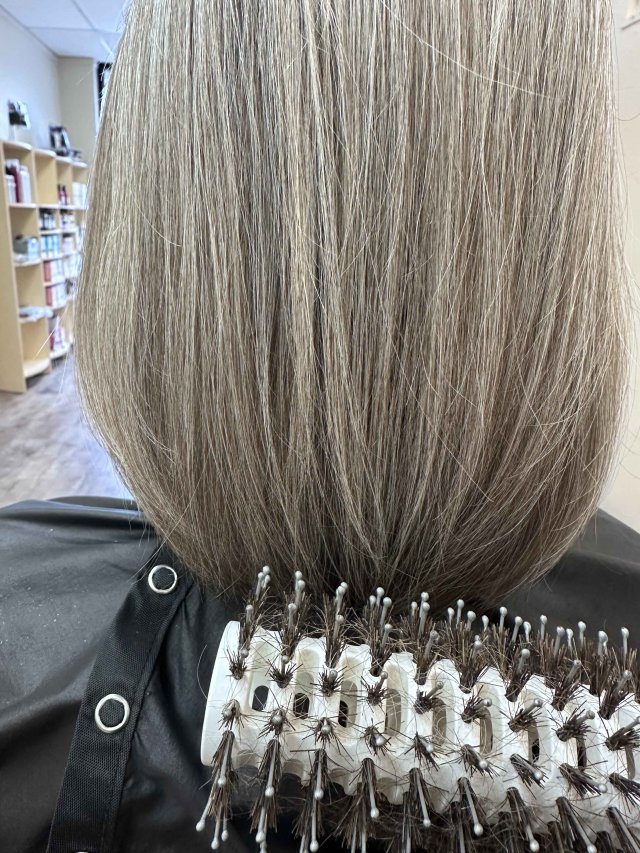
Cuts with more weight such as a bob will often give the balance and shape you desire.